This is not a philosophical question.
For me it is very real.
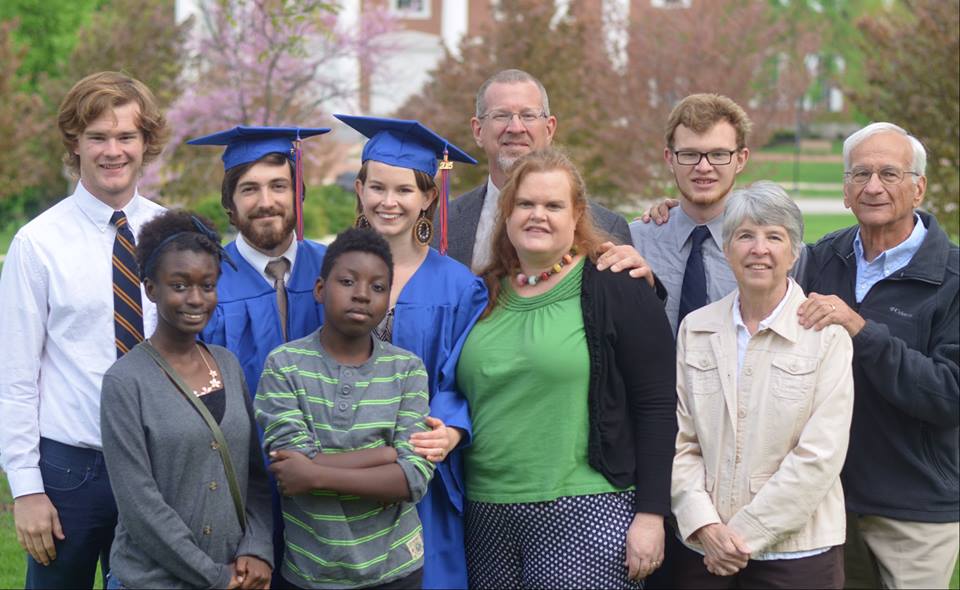
I have two beautiful daughters.
Both
on occasion braid their hair. One has black skin.
Dajerria Becton is about the same age and
weight as my daughter with black skin.
When I started
watching Brandon Brooks’ video I wanted to see what was the social media uproar
about. I giggled a little at Eric
Casebolt’s barrel role. Yes, he’s fit
and athletic, but a little too gung-ho.
His language was vulgar. It made
me cringe to consider him an “officer of the peace.” Other police officers seemed to be in a
tough community conflict and acted reasonable and measured. Eric Casebolt ran around with little
apparent reason. I only heard him use
vulgar language with children who had black skin. My judgement of Eric Casebolt drifted
towards a serial racist. Then he did
the unthinkable.
Eric Casebolt grabbed an unarmed teenage girl with black
skin in a swim suit by the arm. He threw
her upon a concrete sidewalk. I
watched an assault. Dajerria Becton
bore a remarkable resemblance to my daughter with black skin. My emotions no longer were about pastoral
interest. Phileo (family) love raged
through my veins. This could be my daughter being assaulted in
public. I was enraged.
HOW COULD HE GRAB HER
BRAIDS?

The McKinney police chief, Greg Conley called Eric Casebolt’s
actions “indefensible,” and “out of
control.”
I add some other descriptions such as appalling, abhorrent, and
reprehensible.
When one of my
missionary heroes, Paul of Tarsus was describing the darkest parts of our humanity
he lists fits of rage such as Eric Casebolt’s in the same breath as sexual
promiscuity and drug abuse (Galatians 5:19-21.)
I was most upset when Eric Casebolt grabbed Dajerria Becton’s
braids. I’ve watched my daughters and
their friends go through the pain of their hair being braided for years. It is a special intimacy they share. Those braids make summer fun. They make swimming frequently manageable. They require pain and patience to acquire. Those braids are a sacred female trust
among our African community.
How dare Eric Casebolt grab Dajerria Becton’s braids? As he grabbed those braids I wondered if I
was about to see a sexual assault. He
was stripping her of her dignity. He
was publicly humiliating her and her community. He intruded upon an intimacy that none
should approach without permission.
WHAT WOULD I HAVE
DONE?
By the grace of God I was not there.
Nor was my daughter being assaulted.
Yet, the question haunts me.
I could easily see myself in such a
community conflict stepping in the middle of people – trying to calm emotions
and seeking peace.
I’ve done that most
of my pastoral career.
Yet, I’ve only
twice seen my daughter’s safety threatened.
(Both were by animals.)
I probably would have done one of two things. I may have fallen briefly into a daze. I may have thought I was in a
nightmare. Surely this is not
real? How could a policeman
commissioned to protect and serve our community throw an unarmed female half
his weight upon the cement? I may have
just stood there in shock.
The second response could have been that phileo (family) love
would take over. I think I’m about as
strong and physically as large as Eric Casebolt. I may have quickly come to my daughter’s
defense. If I came to her defense some
would accuse me of a crime.
WHY? WHAT
KIND OF A MAN IS ERIC CASEBOLT?
Selfishly, I thank God that I was not in McKinney and my
daughters were not at that pool party.
Yet, the question of why haunts me.
I want to understand Eric Casebolt.
It is a question of discernment.
It takes me to painful angry places.
Yet, from those places where justice and
mercy mingle freely are the places where we heal.
My first inclination was to assume racism drew out Eric
Casebolt’s rage. Maybe, he had been nurtured his whole life to
fear those with black skin. Maybe, he
really felt threatened by a girl half his weight? Yet, friends counseled me not to quickly
rush to the judgement of racism. Though
Eric Casebolt’s language was crass he did not use racial slurs in Brandon
Brooks’ video.
Maybe, Eric Casebolt just never had a mom or grandmother who
washed his mouth out with soap when he used such vile language?
If Eric Casebolt is not motivated by fear of race what
motivates him to behave so violently to a female child? Did he grow up in an abusive home? Did he see his father hit his mother? Is it generational? Did he see his grandfather hit his
grandmother? Is Eric Casebolt
married? Does he have kids? Is his own family afraid of his rage?
Many European-Americans in Texas attend church. Does Eric Casebolt? If so, how did the preaching not sink
in? Is there something deeply wrong
with his church? Or is Eric Casebolt
one of those in America with no faith.
If so, it would make my judgement of him much easier. I hear my mentors of faith proclaim over and
over again that our physical strength of manhood is to be used to provide and
protect. It is never to be used to
physically harm a woman or child. What
led Eric Casebolt to such a public moral failure?
I heard Eric Casebolt be vulgar.
I saw him be cruel as her threw a
child.
I saw him be cowardly as
unarmed people came to that child’s aid and he drew his gun.
What kind of a man is Eric Casebolt?
Maybe the best I can conceptualize for Eric Casebolt is that
he just snapped. A missionary colleague
once told me that everyone can reach a point of psychosis if you deprive them
of sleep and create enough stress in their life. Maybe, Eric Casebolt is going through a
season with no sleep and high stress that took him to becoming vulgar, cruel,
and cowardly? But if so, why did none
of his friends or family tell him not to go to work on the day he assaulted
Dajerria Becton?
Please give me some answers about what type of a man is Eric
Casebolt.
MY LIFE HAS BEEN
PROFOUNDLY CHANGED BY ERIC CASEBOLT
Two of my five children have black skin.
I’ve watched the deep pain when my children with
black
skin realize they have been falsely judged due to their skin color. I’ve cried with them a few times.
I’ve watched my children with white skin
become enraged when they stumble upon racism directed at their siblings.
I’ve accepted a painful reality. My son with black skin needs to be extra
respectful and cooperative when dealing with police in America. I’ve had to tell him that horrendous truth
to keep him safe.
Until Eric Casebolt publicly threw Dajerria Becton I didn’t
conceptualize my daughter could be assaulted by a policeman in America because
of her race.
It might happen in a few African countries where corruption
is high. It would never happen in
Rwanda. Yet, I have to concede this
possibility in America.
When nightmares fill my sleep I see Idi Amin’s henchmen,
Rwanda’s genocidaires, and Eric Casebolt.
He joins my list of those who used the authority of a government to
assault basic human rights.
My friends
and family have been in the past or could be in the future victims.
We told our daughter with black skin the messages we’ve told
our black skinned son. Don’t make fast
movements. Don’t argue. Cooperate.
Wait until another time when you can safely confront if your conscience
says you must.
I tell my children with white skin how to deal with a police
stop. Yet, I don’t have much fear of
when that happens.
Eric Casebolt has profoundly changed my fear quotient.
WHY DID MANY’S
EMPATHY DRIFT TO ERIC CASEBOLT
INSTEAD OF DAJERRIA BECTON?
IS SHAME AND OUTRAGE DEAD AMONG AMERICAN
EVANGELICALS?
I don’t know how one can with an open Bible defend Eric
Casebolt’s actions.
One of the most
shocking matters the last few days was the small number of American
Evangelicals who called Eric Casebolt’s behavior sin. Evangelicals in the past have written and
spoken about the death of outrage and shame in American culture.
I concur with their theology.
Our humanity wrestles with both our dignity
and our depravity.
Sometimes our
depravity reigns.
When depravity reigns
we wound our community.
The community
should have an impulse of outrage.
When the Spirit convicts us of our sin we should have an impulse of
shame.
Then the process of change and
forgiveness happen.
Our community heals.
Why did many’s empathy drift to Eric Casebolt instead of
Dajerria Becton? Some have proposed
that we didn’t know the whole story. I
understand that a bit. I’m a
missionary. I know context
matters. Yet, no matter what the
context throwing a child upon concrete is wrong. Dajerria could have been my daughter. She could have been your daughter. Why was so many’s empathy so misplaced?
Some remark that I just don’t understand policing. True.
I’m not a cop. However, I’ve
pastored soldiers, police, and security personnel my whole adult life. My friends in those professions brought our
community safety from those who were abusive to women and children. Eric Casebolt is not like my brothers and
friends in America, Uganda, and Rwanda’s security services. In fact, my brothers and friends in those
branches at their most measured states would use the words “indefensible” and “out
of control” to describe Eric Casebolt’s actions.
I sense a deep spiritual problem in the fabric of
Evangelical America that did not express outrage at the public assault of
Dajerria Becton by Eric Casebolt.
CAN I FORGIVE ERIC
CASEBOLT?
However, another deep spiritual problem also remains.
Can I forgive Eric Casebolt?
My boss, Jesus of Nazareth repeated forgiveness is one of His
commands. I must forgive Eric
Casebolt. That journey of forgiveness
may last my entire life.
Forgiveness will not mean that I forget his assault on a
child much like my daughter. Nor will
that forgiveness mean that I close my eyes to the systematic injustices and
sins of race that haunt the American experience.
Forgiveness will practically mean that when nightmares of
Eric Casebolt awaken my sleep I pray for his good. When I need a motivation to run a little
farther or lift a little more weight I don’t conceptualize using my strength to
take revenge on Eric Casebolt. I know
how evil Eric Casebolt’s assault was.
I call it sin. Yet, I let go of
the need for revenge. I cry for
justice. I know ultimate justice
will also find me guilty. I have also
done appalling, abhorrent, and reprehensible sins. Forgiveness leads me to hope that on the
Day of Judgement Eric Casebolt will kneel with me and call upon the grace of
God.
The journey to forgive on this earth can lead to
reconciliation. However, that also
requires the offender to recognize his sin and take responsibility. I hope to hear Eric Casebolt make a public
apology for his sin against Dajerria Becton.
I hope in that apology he offers no excuses and only a contrite broken
heart. I hope Eric Casebolt will spend years making
amends to all those he has hurt. If his
assault goes to court I hope he’ll simply say, “Guilty. My actions were inexcusable. I throw myself at the mercy of the court.” Those type of actions would not only heal
our broken community in America they would heal Eric Casebolt.
Yet, for me I must forgive Eric Casebolt whether he repents
or not. This journey may take the rest
of my life. So help me God I will try.
WHAT NEXT?
The social media banter and lack of empathy for Dajerria Becton
has exposed some dark places in the American experience.
I can’t blame.
I must assume responsibility.
I’m going to continue to make friends with
police, soldiers, and security personnel.
If God allows us to plant another church I hope those men and women who protect our community will feel
welcome.
I’m going to find ways to
volunteer and help.
I hope if a security personnel is
near the point of snapping he’ll call me, let me pray, and he’ll listen to my
counsel.
I’m going to accept the reality that America has deep
systematic and generational patterns of sin related to race. I’ll try my best to be a faithful presence
in the institutions of America. We must
bring about change.
I’ll try most days to read my Bible and pray. In the process I hope to see my own sin plus
those of my community. I pray we can
find the grace to repent and forgive.
How can I not take responsibility? After all, Dajerria Becton could be my
daughter and Eric Casebolt could be my brother?
 We will be making some adjustments in coming months. We anticipate those adjustments will see more blogging, writing, and social media usage.

 If you’re looking at social media and asking the question,
“What would Jesus do?” We at this point don’t have a good answer. However, if
you are looking at social media and asking, “What would the Apostle Paul do?”
please pull up a chair. We think he’d
be a blogging, facebooking, and tweeting missionary. We think the same thing about Exilic
prophets like Ezekiel or Daniel. We’ll
try to live out that presupposition as best we can.